Tokyo · Ferrari & Lamborghini · Hotel Pickup Included
RIDE A
SUPERCAR
THROUGH TOKYO
A chauffeured supercar ride through Tokyo. Take the passenger seat of a Ferrari or a Lamborghini while a professional driver handles the city. 1 hour ¥100,000 · 3 hours ¥180,000 per person. Free hotel pickup. No licence needed.
TOKYO SUPERCAR DRIVE is a supercar passenger experience in Tokyo, Japan. You ride in the passenger seat of a Ferrari 488 GTB or a Lamborghini Revuelto while a professional Japanese driver takes you through the city.
Two packages are available: a 1-hour ride past Tokyo's landmarks at ¥100,000 per person, and a 3-hour evening ride to Daikoku PA at ¥180,000 per person. Hotel pickup anywhere in central Tokyo is included, and because you ride as a passenger, no driving licence and no International Driving Permit are required.
Choose Your Car
THE FLEET
Two cars, each with a completely different character — a turbocharged Ferrari V8 and a hybrid Lamborghini V12. You pick which one you want when you book, subject to availability on your date. The price is identical for both, so the choice is purely about the engine you want to hear.
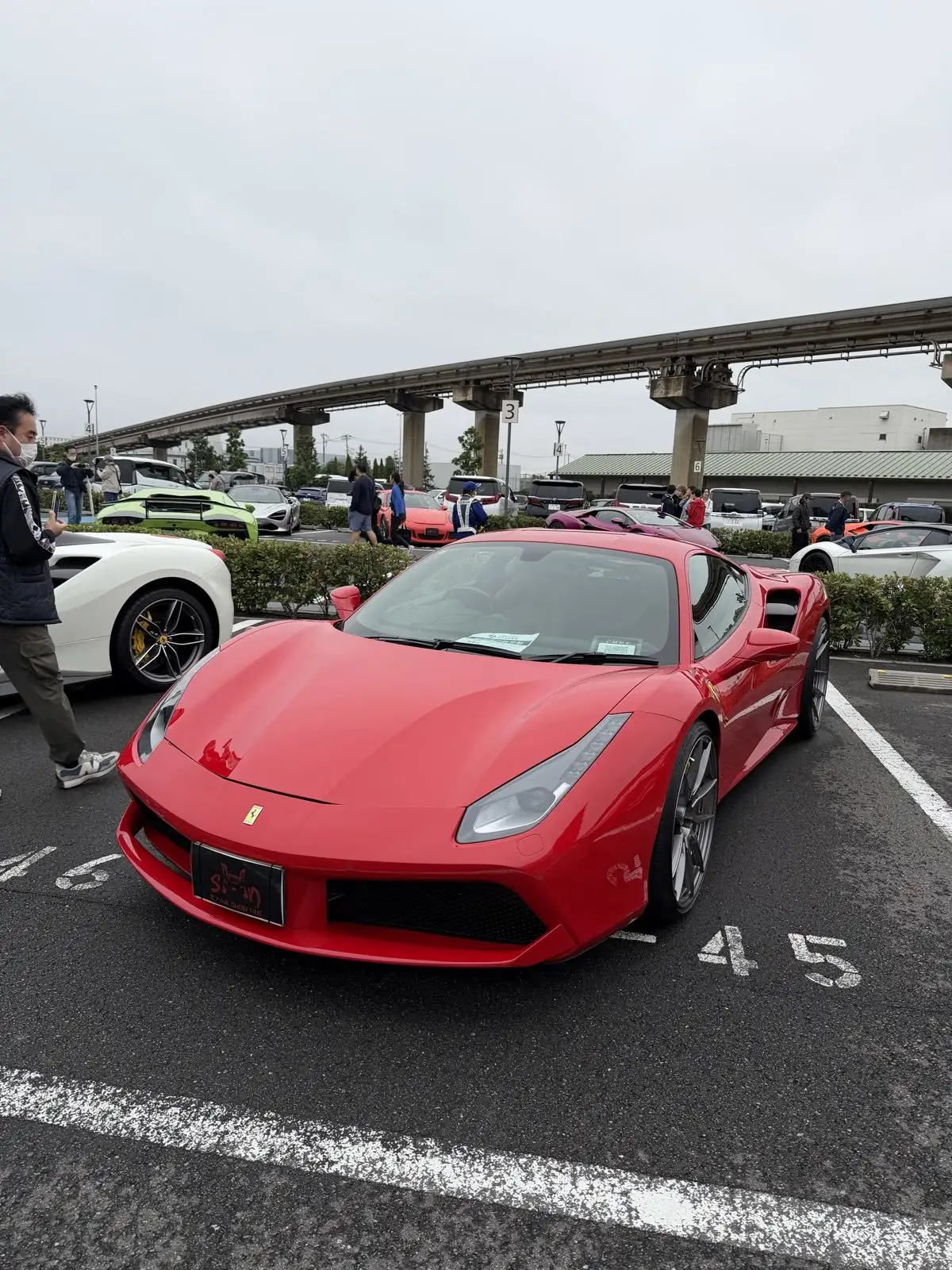
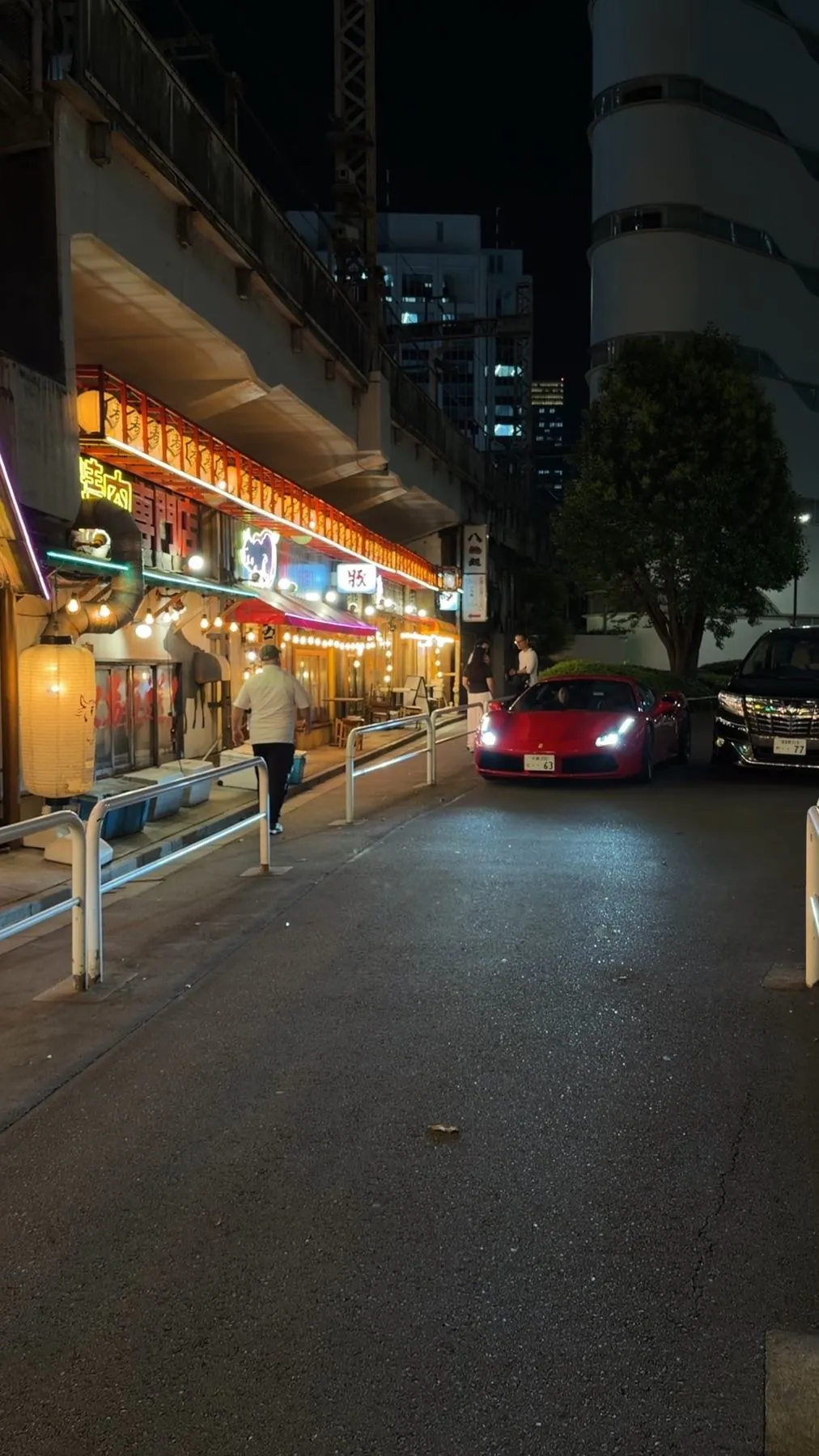
The car that redefined the modern Ferrari mid-engine V8. The 3.9-litre twin-turbocharged V8 sits directly behind your head, and the flat, urgent shove of turbocharged torque is unlike anything on a public road. A strict two-seater, so one guest rides per booking. Red, as a Ferrari should be.
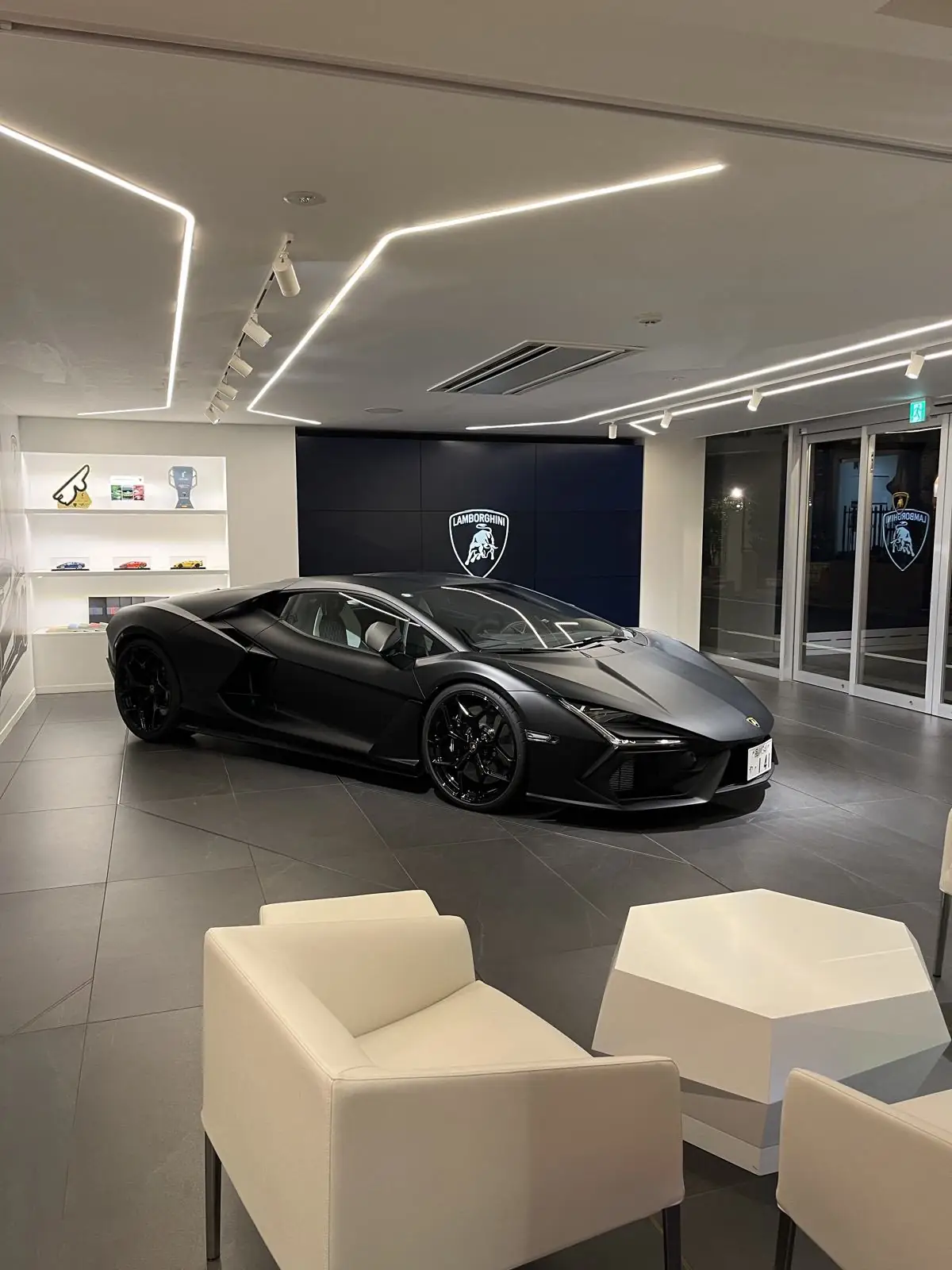
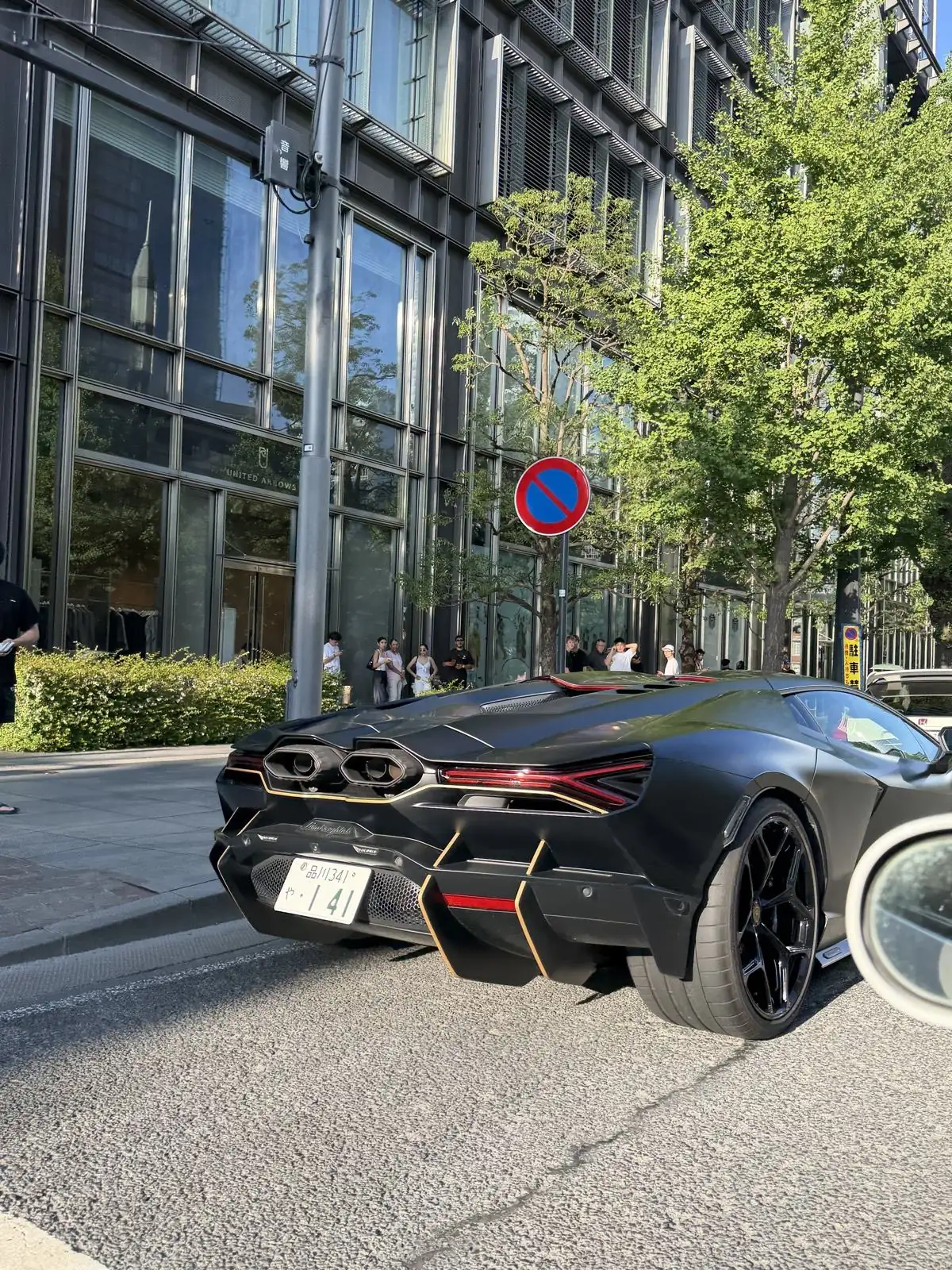
Lamborghini's flagship and the successor to the Aventador. A naturally aspirated 6.5-litre V12 paired with three electric motors for 1,015 hp combined — the most powerful car in our fleet by a wide margin. A strict two-seater, so one guest per ride. In black, it is genuinely intimidating on a Tokyo street.
Riding with a group? Both cars are strict two-seaters, so a couple is handled by running both cars in convoy — which also makes for far better photos and video than sharing one car. Larger groups are handled with consecutive departure slots. Tell us your group size on WhatsApp and we will arrange it.
Pricing
TWO PACKAGES
Both packages are priced per person and are all-inclusive: the car, the professional driver, fuel, expressway tolls, insurance and hotel pickup are all covered. There are no hidden fees and no security deposit.
- 60 minutes in the passenger seat of your chosen supercar
- Tokyo Tower — the city's red steel landmark, lit after dark
- Rainbow Bridge and Odaiba — the bay skyline crossing
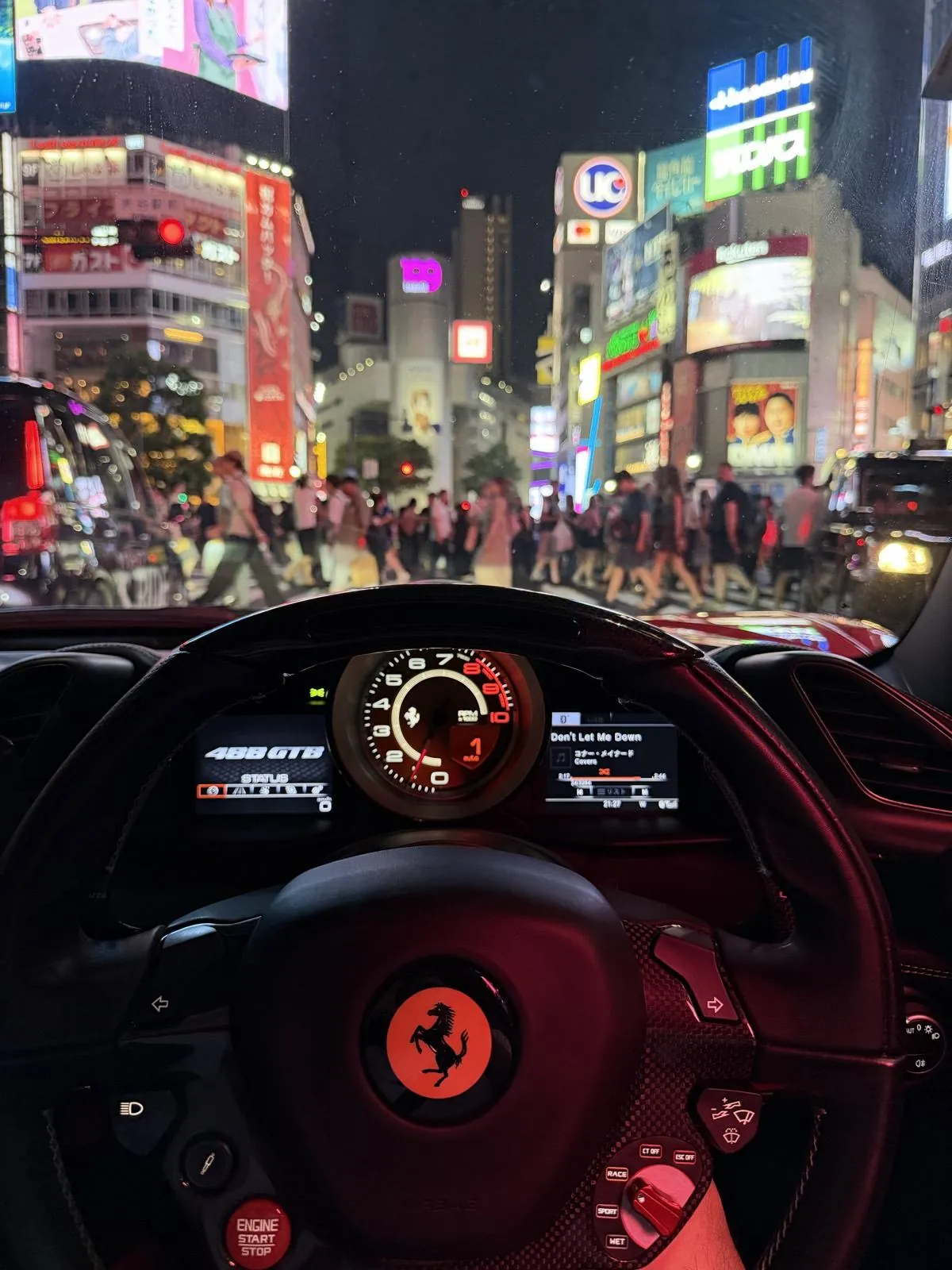
- Shibuya Scramble Crossing — the world's busiest pedestrian crossing
- Ginza and the Imperial Palace — Tokyo at its most composed
- Free hotel pickup and drop-off in central Tokyo
- Photo stops wherever parking allows
- 3 hours from an 18:00 hotel pickup
- Bayshore Route (Wangan) expressway — Tokyo's legendary night road
- Rainbow Bridge crossing at dusk
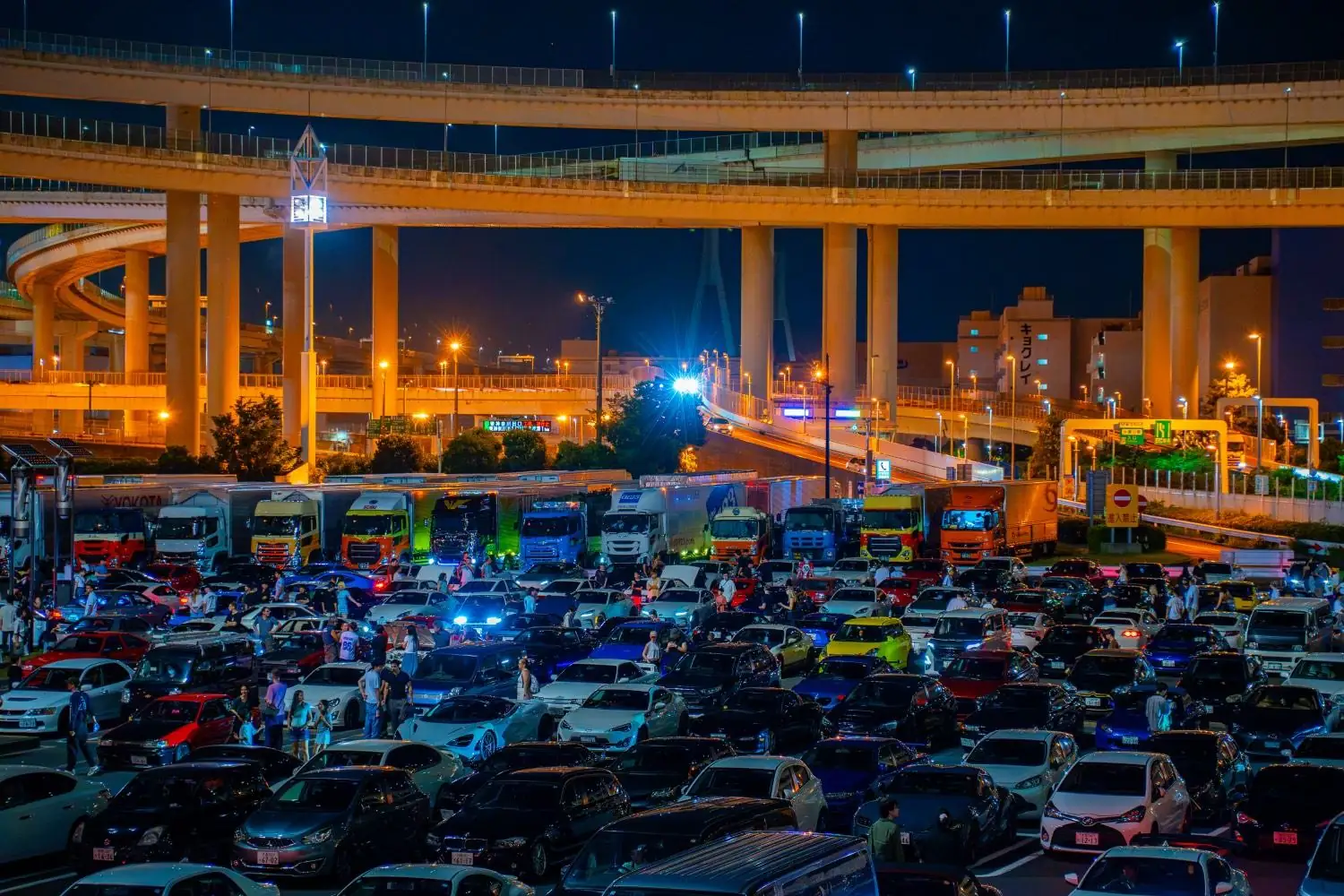
- Daikoku Parking Area — Japan's most famous car meet, inside a spiral interchange under the Yokohama Bay Bridge
- Time on foot at Daikoku among the gathered cars
- Return along the bay to your hotel in Tokyo
- Free hotel pickup and drop-off in central Tokyo
| Included | Supercar, professional driver, fuel, expressway tolls, insurance, hotel pickup and drop-off |
| Not included | Food and drink, personal souvenirs, entry fees to any attraction you choose to stop at |
| Guests per car | 1 guest. Both cars are strict two-seaters — driver plus one passenger. Groups ride in convoy, one guest per car. |
| Licence required | None. This is a passenger experience. |
| Payment | Cash or credit card, arranged after we confirm your booking. Nothing to pay to request one. |
| Cancellation | Free of charge up to 24 hours before your booking. Within 24 hours, 100% of the fee applies. |
| Languages | English and Japanese |
Route · 1 Hour
THE TOKYO ICONS LOOP
A 60-minute loop through the four parts of Tokyo that everyone recognises. The exact order is decided on the day by your driver to work around traffic, but every ride covers all four.
Route · 3 Hours
THE DAIKOKU NIGHT RUN
Daikoku Parking Area is a highway rest area built inside a spiral interchange beneath the Yokohama Bay Bridge, about 40 minutes from central Tokyo. It has no train or bus access, which is precisely why it became the gathering point it is — you can only get there by car (every way in, compared). It has appeared in Fast & Furious: Tokyo Drift and is the single most photographed car meet in Japan.
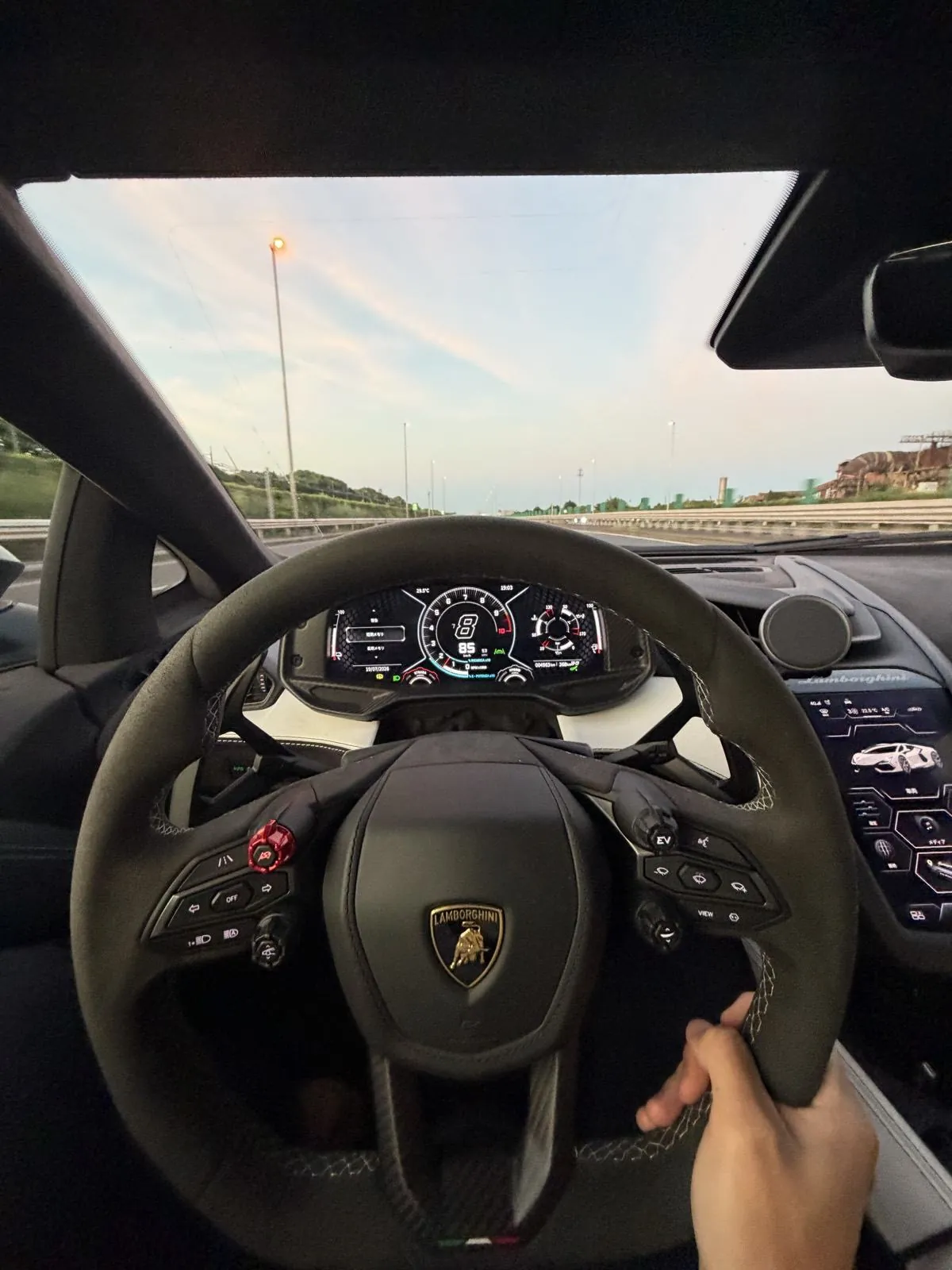
Times are indicative. Daikoku PA is a public facility and is occasionally closed at short notice by the highway operator; if that happens on your date we switch to Tatsumi PA or Umihotaru and tell you in advance.
Why a ride, not a rental
RIDE VS RENT
FAQ
QUESTIONS
Secure your ride
BOOK NOW
Fill in your details, choose your car, then pick a package below. Nothing to pay now — we confirm availability first, then arrange payment with you.
Your details
Choose your package
🔒 No payment required now. After your request we confirm availability, then arrange payment with you.
The nights
REAL PHOTOGRAPHS
Every image on this site was taken on an actual night out, with our own cars, by the person who drives you. No stock photography, no renders, no cars we do not own. You keep every photograph from your own evening at no extra cost.
The complete answer
RIDING A SUPERCAR IN TOKYO
Every year a large number of visitors arrive in Japan wanting one specific thing: to be inside a Ferrari or a Lamborghini, at night, in Tokyo. Most of them cannot drive here, most of them do not want the liability of driving a car worth more than a house, and almost none of them can reach the one place they actually came to see. This section answers the whole question in one place.
Can a visitor ride in a supercar in Tokyo without a licence?
Yes, and it is the simplest route. A passenger experience means a professional driver operates a privately owned supercar while you ride in the passenger seat.
Because you never take the wheel, none of Japan's licensing rules apply to you: no Japanese licence, no International Driving Permit, no minimum age, no security deposit and no insurance excess. TOKYO SUPERCAR DRIVE runs exactly this, from ¥100,000 per person for an hour.
The alternative is a self-drive rental, which is legal but far more restrictive. Japan recognises only International Driving Permits issued under the 1949 Geneva Convention. Permits issued under the 1968 Vienna Convention are not valid here, which catches out drivers from Germany, Switzerland, France, Belgium, Monaco, Estonia, Slovenia and Taiwan — they need an official Japanese translation of their home licence from JAF or their embassy, arranged in advance.
Holders of mainland Chinese licences cannot drive in Japan at all, because China is not a signatory and Japan does not accept translations of Chinese licences. Beyond documents, supercar rentals in Tokyo typically require you to be 26 or older, hold a deposit of around ¥100,000, and carry an insurance excess of up to ¥500,000 per incident.
What does it cost in Tokyo in 2026?
For a Ferrari at Daikoku PA with a professional driver, the published market sits between ¥180,000 and ¥209,000 per guest. Prices below were read directly from each operator's public pricing page on 10 September 2026.
| Operator | Format | Total, one guest |
|---|---|---|
| TOKYO SUPERCAR DRIVE | 3 hours, passenger, free hotel pickup | ¥180,000 |
| Tokyo Supercars | 3 hours, self-drive, Shibuya meeting point | ¥207,000 + ¥100,000 deposit |
| Niche Drive | 2.5 hours, passenger, Shibuya meeting point | ¥209,000 incl. tax |
Watch what is excluded. Expressway tolls across the bay, parking and fuel are real money on a three-hour night run, and consumption tax is sometimes added on top of a quoted figure. Our two prices are totals: ¥100,000 for the hour, ¥180,000 for the three. The three-hour works out at ¥60,000 per hour against ¥100,000 for the short route — 40% cheaper per hour, and the only one that reaches Daikoku PA.
Why Daikoku PA is the part people remember
Daikoku Parking Area is a circular rest stop underneath the Yokohama Bay Bridge interchange, and it is where enthusiasts have gathered nightly for decades. It is the real place behind the car parks in Initial D and Fast & Furious: Tokyo Drift. Entry is free.
The catch is access. Daikoku sits inside the expressway system: there is no pedestrian entrance, no station, no bus, and taxi drivers routinely decline the route or misunderstand it. The only way in is to already be in a car on the expressway. That is the single most common thing visitors get wrong, and it is the reason the cost of visiting Daikoku is entirely the cost of getting there.
No operator can guarantee it. Kanagawa police close the entrance ramp when the crowd grows too large, most often on Friday and Saturday nights and around major holidays. We aim for Daikoku on every three-hour booking and carry Umihotaru PA on the Tokyo Bay Aqua-Line as the standing alternative — an artificial island in the middle of the bay, which photographs arguably better and feels completely different.
When should you come?
This matters more than most people expect, because Tokyo's sunset moves by two and a half hours across the year. We calculated the figures ourselves rather than estimating them.
| Period | Sunset | At an 18:00 departure |
|---|---|---|
| 17 Oct – 27 Jan | 16:28 – 17:05 | Completely dark from the first minute |
| Feb – Mar, late Sep – mid Oct | 17:10 – 18:00 | Dusk to dark |
| 31 Mar – 7 Sep | 18:00 – 19:00 | Still daylight at departure |
Blue hour in Tokyo lasts only 25 to 30 minutes — the sun drops steeply at 35.7°N — so if you want a car against a deep blue sky, you have about half an hour, not an evening. November to February is the strongest window overall: fully dark by 18:00, and the clearest air of the year over Tokyo Bay.
Bring a coat, because the hour at Daikoku is spent outdoors over water. The full dataset, calculated with the NOAA solar position algorithm and accurate to about two minutes, is published at When Tokyo Gets Dark.
Which car should you choose?
Both cost exactly the same, so this is a question of character rather than budget. The Ferrari 488 GTB is the classic shape: Rosso Corsa red, a 3.9-litre twin-turbo V8 making 670 hp, 0–100 km/h in 3.0 seconds, and a sound that arrives as a hard shove with a crack on the downshift.
Red also holds its colour under Tokyo's neon and sodium lighting, where darker cars go muddy, which makes it the stronger choice on the one-hour landmark route.
The Lamborghini Revuelto is the rarer and more theatrical car: matte black, scissor doors, a 6.5-litre naturally aspirated V12 paired with three electric motors for 1,015 hp combined, and 0–100 km/h in 2.5 seconds. Its note climbs rather than shoves.
Under Daikoku's overhead floodlighting the matte finish reads as a silhouette and hard edges, which is exactly what that venue rewards. Lamborghini has signalled the end of its pure V12 line, so this configuration is likely to be read, in ten years, as the last of something.
Who should not book this
A comparison that always concludes “choose us” is not a comparison, so here is where we would send you elsewhere. If you mainly want to see Tokyo's landmarks, a taxi costs a fraction of this and shows you the same buildings. If you want to drive, this is the wrong product entirely and a self-drive operator with a large fleet is the obvious answer.
If you are two or more people who want to sit together, both our cars are strict two-seaters and a JDM tour seating three per car does what you actually want. And if ¥100,000 is a meaningful share of your trip budget, a JDM night tour to the same Daikoku PA starts at ¥15,000 to ¥26,000 per person and roughly 80% of the evening is identical.
Three of those alternatives are brands we also operate — GTR MAFIA TOKYO for Nissan GT-R specifically, and STUTUTU CLUB TOKYO for the wider JDM fleet and groups. The recommendation costs us the booking either way. We would still rather you read it before paying than after.
How booking actually works
There are two cars and one driver, so availability is a person checking a diary rather than a database query. You send a request, nothing is charged, and we confirm the date and the car on WhatsApp before any money changes hands.
Payment is arranged afterwards, in cash or by card. You are never asked to transfer a deposit to an account before anyone has spoken to you — and if any supercar operator in Tokyo does ask you for that, stop.
Cancellation is free up to 24 hours before your booking, with a full refund. Within 24 hours, and for no-shows, the full fee applies. If we cancel for genuinely unsafe weather — a typhoon warning, heavy snow, expressway closures — you reschedule or take a full refund at no cost.
That call is ours to make, not a cost we pass to you. Light rain changes nothing: wet Tokyo asphalt at night reflects every light in the frame and usually improves the photographs.
Learn more