The Best Supercar
Photo Spots in Tokyo
Tokyo is one of the best cities in the world to photograph a car in, and one of the hardest to actually do it in. Almost nowhere allows you to stop. This guide covers the locations that genuinely work, the times of day that work, and — the part most guides skip — how to get a good shot when the car is moving and you cannot get out.
The Short Answer
The six best supercar photography locations in Tokyo are Tokyo Tower (from Shiba Park and the Akabanebashi approach), the Rainbow Bridge approach at Shibaura, Shibuya Scramble Crossing, Ginza's Chuo-dori at night, the Odaiba waterfront, and Daikoku Parking Area in Yokohama. Of these, only Odaiba and Daikoku PA reliably allow a car to stop for a static shot. The rest are shot from the car in motion or from the pavement.
The Six Locations
1. Tokyo Tower
The most recognisable backdrop in the city and the single most requested shot. Two approaches work: the Akabanebashi side, where the tower rises directly out of the windscreen as you drive toward it, and Shiba Park, where the whole structure is visible above the trees. The tower is lit until midnight, and the orange lighting is warm enough that a red or white car photographs superbly against it.
Best time: just after sunset, when the sky still has colour but the tower lights are on — roughly a 25-minute window.
2. Rainbow Bridge and the Shibaura approach
The bridge itself cannot be stopped on, but the approach road and the loop ramp on the Shibaura side produce the shot people actually want: the car with the illuminated span and Tokyo Bay behind it. Shot from inside a moving car, the cables strobing past the side window make excellent video.
Best time: after dark, when the bridge lighting is on.
3. Shibuya Scramble Crossing
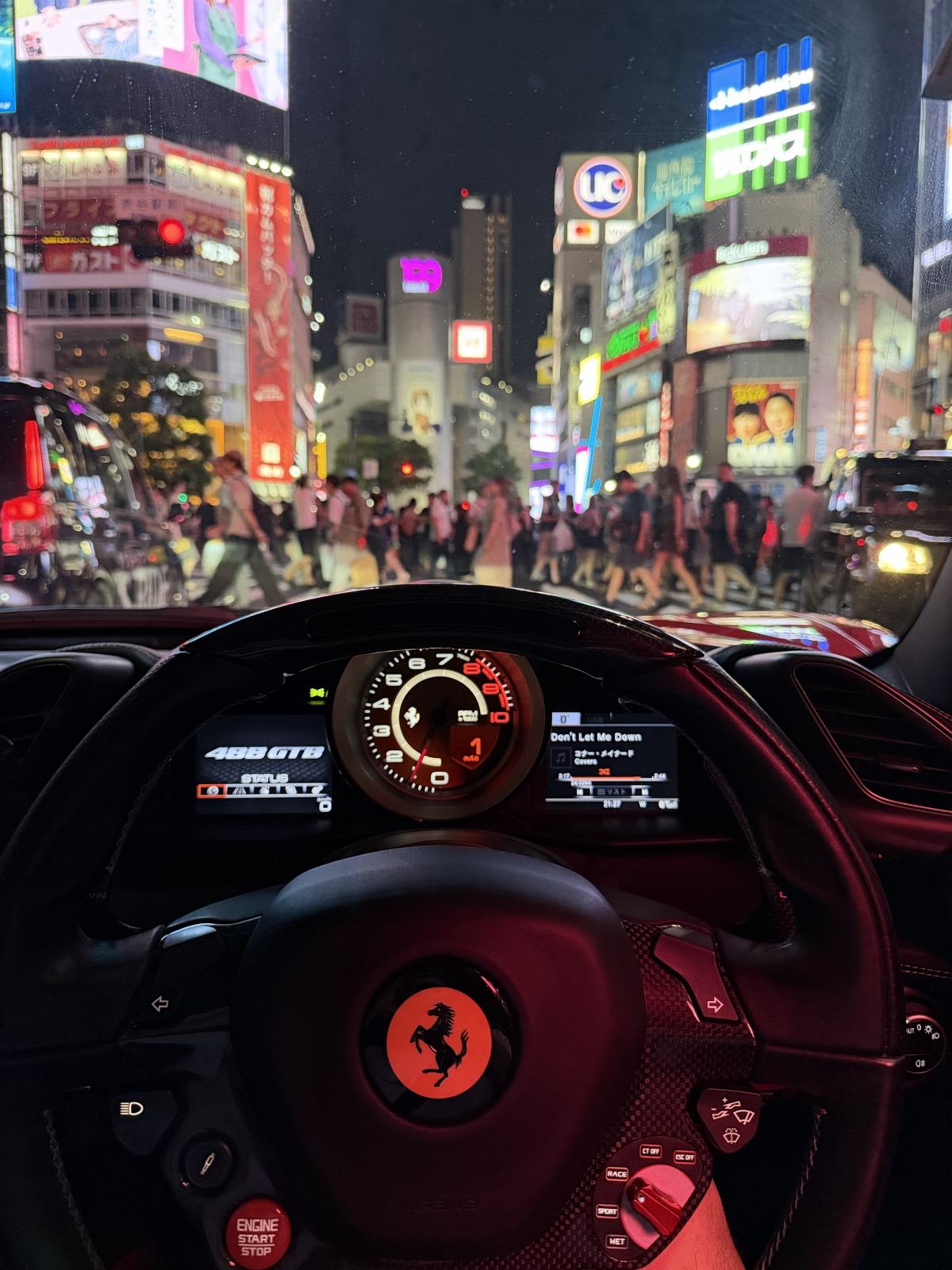
Not a place to stop — ever — but driving a Ferrari through the Scramble at night, with the screens overhead and several hundred people crossing in front of you, is one of the defining video sequences of a Tokyo supercar ride. Shoot it from the passenger seat facing forward, not sideways.
Best time: 20:00 to 22:00 on a Friday or Saturday, when the crossing is fullest and the screens are brightest.
4. Ginza, Chuo-dori
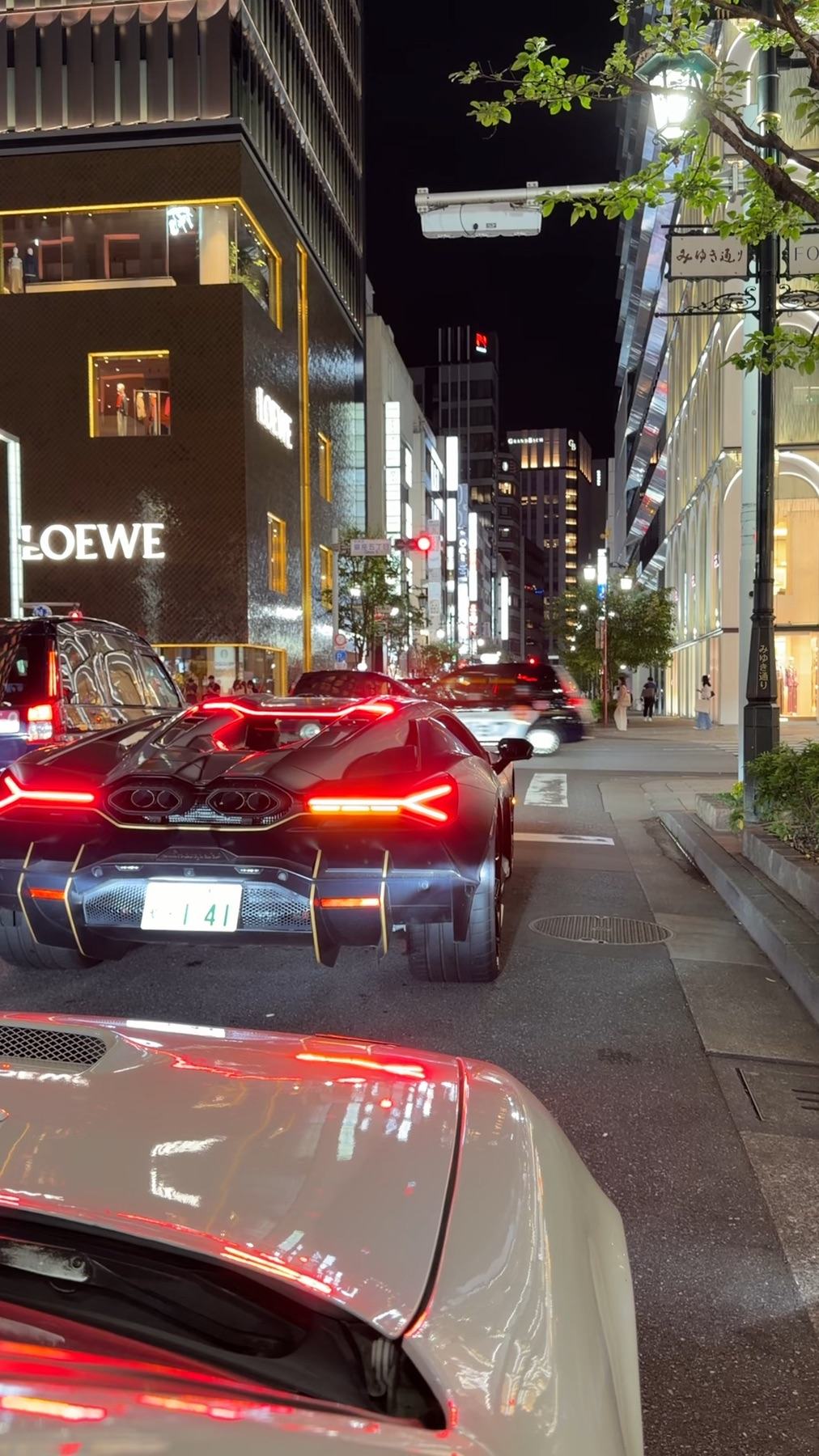
Ginza's flagship stores throw an enormous amount of clean white light onto the road, which is unusually flattering for cars. The reflections on black paint here are the reason we suggest the Revuelto for evening bookings. The Imperial Palace side, by contrast, gives you a dark, quiet, formal backdrop within two minutes' drive.
Best time: after 20:00. On Sundays parts of Chuo-dori close to traffic for the pedestrian precinct, so avoid Sunday afternoons.
5. Odaiba waterfront
The most photographer-friendly location in central Tokyo, because there is parking and space to walk around the car. Rainbow Bridge and the Tokyo skyline sit across the water, and the area is wide and open in a way almost nothing else in Tokyo is. If you want a proper static shot with the car stationary and yourself in frame, this is where it happens.
Best time: blue hour, roughly 20–40 minutes after sunset.
6. Daikoku Parking Area, Yokohama
The best car photography location in the Kanto region and the reason the 3-hour package exists. A circular parking area beneath the Yokohama Bay Bridge, reachable only from the expressway, filled on weekend evenings with everything from Skylines to Countaches. You can park, walk around, and photograph your car among a hundred others.
Best time: Friday and Saturday from about 20:00.
Where You Can and Cannot Stop
| Location | Static shot possible? | Notes |
|---|---|---|
| Tokyo Tower / Shiba Park | Sometimes | Depends on parking availability on the day |
| Rainbow Bridge | No | Expressway — stopping is illegal. Shoot in motion |
| Shibuya Scramble | No | Shoot in motion from the passenger seat |
| Ginza Chuo-dori | No | Shoot in motion; Imperial Palace side is calmer |
| Odaiba waterfront | Yes | Parking available; the best static option in Tokyo |
| Daikoku PA | Yes | Free to enter, huge, and the whole point of going |
📸 Tell your driver before you set off. Both routes have enough slack to prioritise the shots you care about, but only if he knows in advance. If Tokyo Tower matters more to you than Shibuya, say so at pickup and he will restructure the loop around it.
Getting a Good Shot From a Moving Car
Most of Tokyo has to be shot in motion, so a few things make a disproportionate difference.
Wipe the inside of the window first
Reflections and haze on the inside of the glass ruin more shots than any other single cause. Ask your driver for a cloth at pickup.
Hold the lens close to the glass
Pressing the phone almost against the window kills reflections entirely. Holding it in the middle of the cabin guarantees them.
Shoot video, pull stills from it
At night, from a moving car, individual photos are mostly blurred. Recording 4K video and extracting frames afterwards produces a far higher hit rate.
Turn off HDR and night mode for the neon
Phone night modes average several frames together, which smears moving neon into mush. Locking exposure manually and slightly underexposing keeps the colours saturated and the signs sharp.
Save the doors for the stops
Scissor doors on the Revuelto and the low-angle exterior shots only happen when the car is stationary — which means Odaiba and Daikoku. Plan those shots for those two places rather than hoping for an opportunity elsewhere.
Which Car Photographs Best Where?
| Car | Strongest locations | Why |
|---|---|---|
| Ferrari 488 GTB — red | Tokyo Tower, Shibuya | Red against the tower's orange lighting and Shibuya's neon is the classic Tokyo shot |
| Lamborghini Revuelto — black | Ginza, Daikoku PA | Black is difficult in daylight but spectacular under Ginza's store lighting and at night |
Frequently Asked Questions
Get the Tokyo Shots You Came For
Tell your driver what you want at pickup. ¥100,000 for one hour, ¥180,000 for three hours to Daikoku PA.
View Packages & BookAsk on WhatsApp