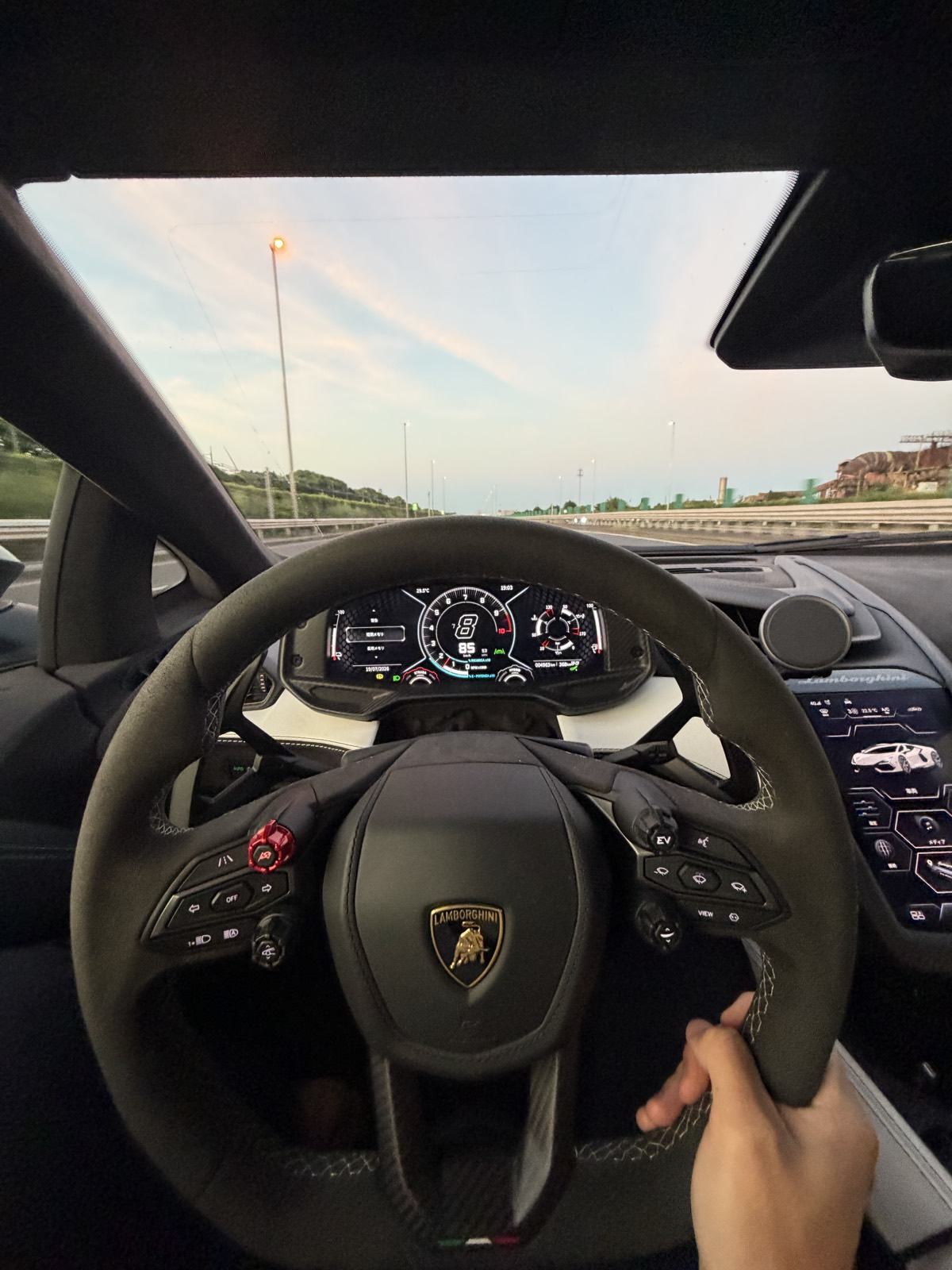
Planning Your
Supercar Ride in Tokyo
Most questions we get on WhatsApp are not about the cars. They are about pickup, timing, weather and what happens if the plan slips. This page answers all of them in one place, including the one detail that surprises visitors most: in June and July, an 18:00 start is still broad daylight.
The Short Answer
We collect you free of charge from any hotel in central Tokyo. The 1-hour ride runs at any hour, day or evening; the 3-hour Daikoku PA ride departs at 18:00. Light rain is fine and the cars run in it — if conditions are genuinely unsafe we reschedule or refund in full at no cost to you. Cancel free up to 24 hours before. Both cars seat one guest, so a group rides in convoy or takes consecutive slots. Wear whatever you like, but bring a jacket in winter: the photo stops are outdoors.
Hotel Pickup — How It Works
Pickup and drop-off are included in the price, both ways, anywhere in central Tokyo. You do not need to travel to a meeting point, which matters more than it sounds when you are carrying camera gear or travelling with someone who does not want to navigate Shibuya at night.
We collect from the hotel entrance or the nearest legal stopping point to it. A few Tokyo hotels sit on streets where stopping is not permitted — if yours is one, we will tell you when confirming and name a spot within a minute or two on foot.
| Area | Pickup | Notes |
|---|---|---|
| Shinjuku, Shibuya, Minato (Roppongi, Akasaka, Azabu) | Free | Core area, no restrictions |
| Chiyoda, Chuo (Ginza, Marunouchi, Nihonbashi) | Free | Core area, no restrictions |
| Shinagawa, Meguro, Ebisu, Shibaura, Odaiba | Free | Core area, no restrictions |
| Ueno, Asakusa, Sumida, Toyosu | Free | Allow a little longer for the transfer |
| Outside the 23 wards — Yokohama, Chiba, Narita, Haneda area hotels | Ask | Often possible; confirm on WhatsApp before booking |
🧳 Coming straight from the airport? Do not book the ride for your arrival day. Narita and Haneda immigration, baggage and the transfer into Tokyo swallow more time than any schedule survives, and a supercar you are too tired to enjoy is a waste of the money. Day two onwards is the right call.
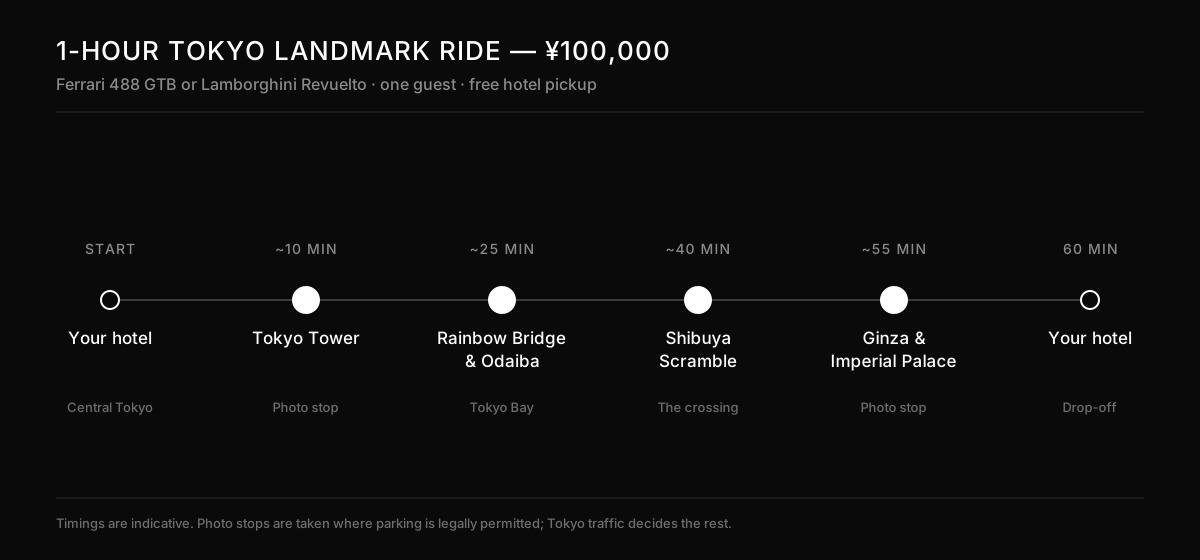
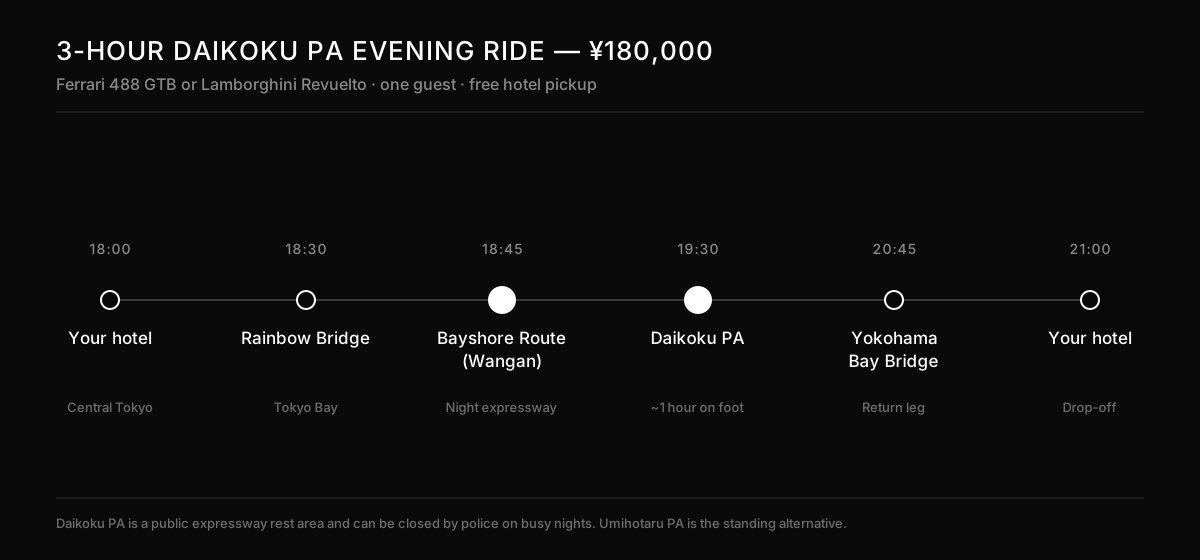
The Two Routes
When to Go — the Detail Nobody Mentions
A “night drive” is only a night drive if the sun has set. Tokyo sits at 35°N and its sunset moves by about two and a half hours across the year, which changes the experience completely.
| Month | Approx. sunset in Tokyo | What an 18:00 start looks like |
|---|---|---|
| December – January | 16:30 – 17:05 | Fully dark from the first minute. The best month for neon. |
| February – March | 17:10 – 18:00 | Dark or nearly dark at departure. |
| April | 18:05 – 18:25 | Dusk at departure, dark by the expressway. |
| May – August | 18:15 – 19:00 | Daylight for the first hour. Daikoku is still dark by arrival. |
| September – October | 16:55 – 18:10 | Dusk to dark. Comfortable temperatures. |
| November | 16:35 – 16:50 | Fully dark. Clear winter air begins. |
If the photographs matter most to you, November to February is the strongest window: the air over Tokyo Bay is at its clearest, the city lights read sharply, and everything is dark from the moment you leave the hotel. Bring a coat — you will want to stand outside at Daikoku for an hour.
If you are visiting in summer, nothing is wrong with the ride, but understand that the first stretch runs in daylight and Tokyo humidity makes the bay hazier. Booking a later start is often possible; just ask.
Which night of the week
| Night | Daikoku PA | Recommendation |
|---|---|---|
| Tuesday – Thursday | Reliably open, steady turnout | The dependable choice |
| Sunday & Monday | Open, quieter | Good if you prefer space to photograph |
| Friday & Saturday | Biggest turnout, highest closure risk | Spectacular when open — but police close the ramp on busy nights |
This is a genuine trade-off, not a sales line. The nights with the most interesting cars are the nights most likely to be shut. We aim for Daikoku on every 3-hour booking and carry Umihotaru PA on the Tokyo Bay Aqua-Line as the standing alternative — an artificial island in the middle of the bay, which photographs arguably better and feels completely different.
Weather
The cars run in the rain. A wet Tokyo at night is reflective and, for photographs, often better than a dry one — wet asphalt doubles every light in the frame. Light and moderate rain change nothing about the booking.
What does change it is genuinely unsafe conditions: typhoon warnings, heavy snow, or expressway closures. In those cases we contact you, and you either reschedule to another evening in your trip or take a full refund at no cost. We make that call, not you, and never at your expense.
🌧️ Tokyo’s wet windows. The rainy season, tsuyu, runs from roughly mid-June to mid-July. Typhoon season peaks in August and September. Neither cancels a trip — both mean you should keep a spare evening in your itinerary rather than booking the last night before you fly.
What to Wear and Bring
There is no dress code. Two practical notes only.
| Why | |
|---|---|
| A jacket, November to March | The hour at Daikoku PA is spent outside, on an exposed expressway rest area over the water. It is colder there than in the city. |
| Soft-soled shoes, no heavy buckles | Not a rule, just kindness to a low-slung interior. Getting in and out of a 488 is a manoeuvre. |
| Your phone or camera | Bring whatever you shoot with. Gimbals are fine. Tell the driver what you want and it will be arranged where it is legal to stop. |
| Nothing else | Fuel, tolls, insurance and parking are already in the price. There is no deposit to leave and nothing to sign for. |
Groups — the Two-Seat Problem
Both cars are strict two-seaters. There is no back seat to put anyone in, and no configuration in which two guests ride in one supercar. This is the single most common misunderstanding, so it is worth being blunt about it.
| Your group | How it works | Cost |
|---|---|---|
| 1 guest | Straightforward | ¥100,000 or ¥180,000 |
| 2 guests | Both cars run in convoy — one of you in the Ferrari, one in the Revuelto. You swap at a stop if you like. | Per person |
| 3+ guests | Consecutive slots, or convoy across both cars in rotation | Per person |
| A group that wants to be together | A supercar is the wrong vehicle. A JDM tour seating three per car, or a van tour seating nine, does what you actually want. | From ¥15,000 per person |
Booking, Payment and Cancellation
| How to book | WhatsApp, or the booking form. We reply quickly. |
| Deposit to request a booking | None. Requesting is free and non-binding. |
| When you pay | After we confirm availability. Cash in Japanese yen, or credit card. |
| How far ahead to book | A few days is usually enough. Weekends and the December–February window fill faster. |
| Free cancellation | Up to 24 hours before your booking time, refunded in full. |
| Within 24 hours | 100% of the fee applies, including no-shows. |
| If we cancel for weather | Reschedule or full refund, at no cost to you. |
Is It Legal? Insurance and Safety
Yes, and the structure matters. You are a passenger in a privately owned, road-legal, insured vehicle driven by a professional Japanese driver. You are not renting a car, so none of Japan’s rental or licensing requirements touch you: no licence, no International Driving Permit, no age minimum, no deposit, no insurance excess.
On the road: the cars are driven briskly where the law allows and calmly where it does not. There is no street racing, no drifting, no speed shown off for a camera. The Bayshore Route at night does not need any of that to be worth the trip, and nobody’s holiday is worth a police stop.
Frequently Asked Questions
Ready When You Are
¥100,000 for one hour, ¥180,000 for three hours to Daikoku PA. Free hotel pickup, free cancellation up to 24 hours before.
View Packages & BookAsk on WhatsApp