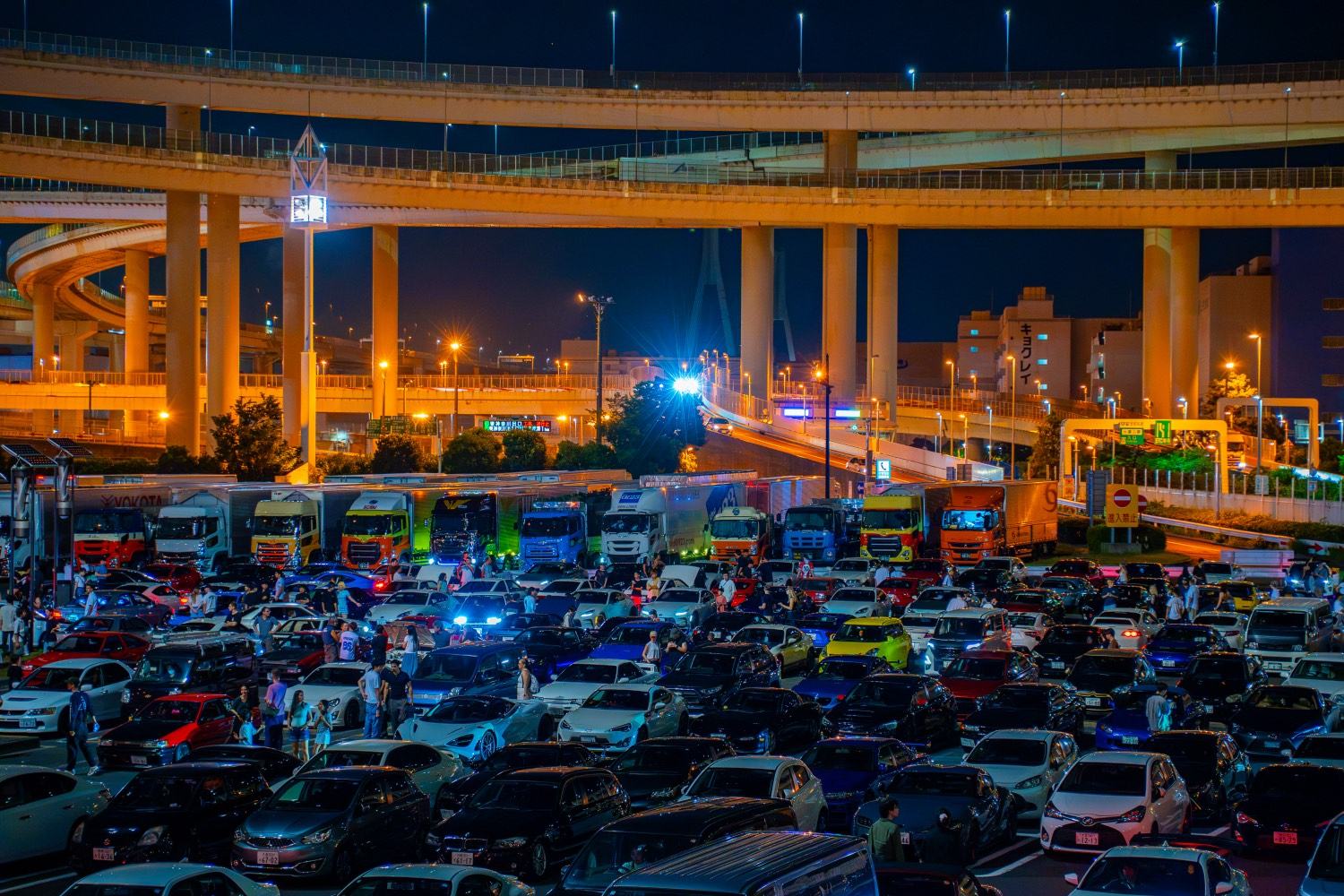
This is the question people actually type, so here is the answer without the marketing. A supercar ride in Tokyo is not cheap, the price has gone up, and there are four clear situations in which we would rather you spent the money on something else. There is also one situation where it is the best money you will spend in Japan.
It is worth it if what you want is access you cannot otherwise buy — Daikoku PA, the Bayshore Route at night, and a Ferrari or Lamborghini you are photographed in rather than next to. It is not worth it if you mainly want to see Tokyo (a taxi does that), if you want to drive (this is the wrong product), if you are a group who want to sit together (two seats), or if ¥100,000 is a meaningful share of your trip budget. Of our two packages the 3-hour ride is 40% cheaper per hour than the 1-hour, which is the single most useful fact on this page.
| Package | Price | Per hour | Includes Daikoku PA |
|---|---|---|---|
| 1-Hour Tokyo Landmark Ride | ¥100,000 | ¥100,000 | No |
| 3-Hour Daikoku PA Evening Ride | ¥180,000 | ¥60,000 | Yes, about an hour on foot |
The three-hour package costs 80% more and gives you 200% more time, plus the one thing the short route cannot include. If you are weighing the two and the budget stretches, the 3-hour is not a slightly better deal — it is a structurally different one.
The 1-hour exists for people whose Tokyo schedule genuinely has one free hour in it, and for proposals and anniversaries where a short, controlled evening is the point. Both are legitimate. But nobody should buy the 1-hour thinking it is the budget version of the 3-hour, because it is a different experience with a landmark route instead of a car meet.
The car is the least interesting part of the answer, which sounds odd on a supercar website. Here is the breakdown of what is genuinely hard to obtain any other way.
Daikoku Parking Area sits inside an expressway interchange. There is no station, no pedestrian entrance and no bus. Taxi drivers routinely decline the route or misunderstand it. Entry is free — getting there is the entire cost, for anyone, in any car.
An elevated expressway across Tokyo Bay that most visitors never see, because tourists do not have cars and trains run underground. It is the view of Tokyo that residents associate with the city and almost no guidebook can give you.
Photographs taken standing next to a parked supercar look like photographs taken next to a parked supercar. The passenger seat of a moving 488 on the Wangan at night does not look like anything you can stage.
Which evenings Daikoku is worth going, which entrance to use, when police are likely to clear the lot, where the scene moves when it closes. That comes from turning up since 2023, not from a route sheet.
| If this is you | What to do instead |
|---|---|
| You want to see Tokyo — the landmarks, the neon, the skyline | A taxi for three hours costs a fraction of this and shows you the same buildings. Book us for the car, not for the sightseeing. |
| You want to drive | This is a passenger experience and always will be. Tokyo Supercars has 40-plus cars for self-drive; budget their ¥100,000 deposit and insurance excess alongside the headline price. |
| You are two or more people who want to be together | Both our cars are strict two-seaters. A JDM tour seating three, or a van tour seating nine, does what you actually want — ours start at ¥15,000 per person. |
| ¥100,000 is a real share of your trip budget | Then it is not worth it, and we would rather say so. A GT-R night tour to the same Daikoku PA starts at ¥26,000 and the evening is 80% the same. |
💬 We are not being modest here. Three of those four alternatives are brands we also operate, and the fourth is a competitor. The recommendation costs us the booking either way. We would still rather you read this before paying than after.
If you came to Japan partly because of cars — because of Gran Turismo, or Initial D, or years of looking at Wangan footage on YouTube — then this is the specific thing you flew for, and there is no cheaper substitute for actually being there.
People in that group almost never describe the car as the best part afterwards. They describe the hour standing at Daikoku, or the moment the bay opens up on the Bayshore Route. The Ferrari is what makes the evening happen; the city is what they remember.
Against the only genuinely comparable products in Tokyo — a Ferrari, at Daikoku PA, in the evening — the answer is that we are currently the lowest published price, though the gap is not enormous.
| Operator | Format | Total for one guest |
|---|---|---|
| TOKYO SUPERCAR DRIVE | 3 hours, passenger, hotel pickup | ¥180,000 |
| Tokyo Supercars | 3 hours, self-drive, Shibuya meet | ¥207,000 + ¥100,000 deposit |
| Niche Drive | 2.5 hours, passenger, Shibuya meet | ¥209,000 |
Prices read from each operator's public pricing page on 10 September 2026. See the full comparison for the deposits, insurance excess and cancellation windows that sit behind the headline numbers.
Three things we cannot fix, listed here rather than buried.
Daikoku PA can be closed. Kanagawa police shut the entrance ramp on busy nights, most often Friday and Saturday. We aim for it every time and carry Umihotaru PA on the Aqua-Line as the alternative, but no operator can promise it.
One guest per car. There is no back seat. If two of you come, you travel in convoy in separate cars and swap at a stop.
Tokyo traffic decides some of the evening. Photo stops happen where stopping is legal, which is not always where the photograph would be best. We will not block a lane for a picture.
¥100,000 for one hour, ¥180,000 for three hours to Daikoku PA. Ask anything on WhatsApp first — including whether you should book at all.
View Packages & Book