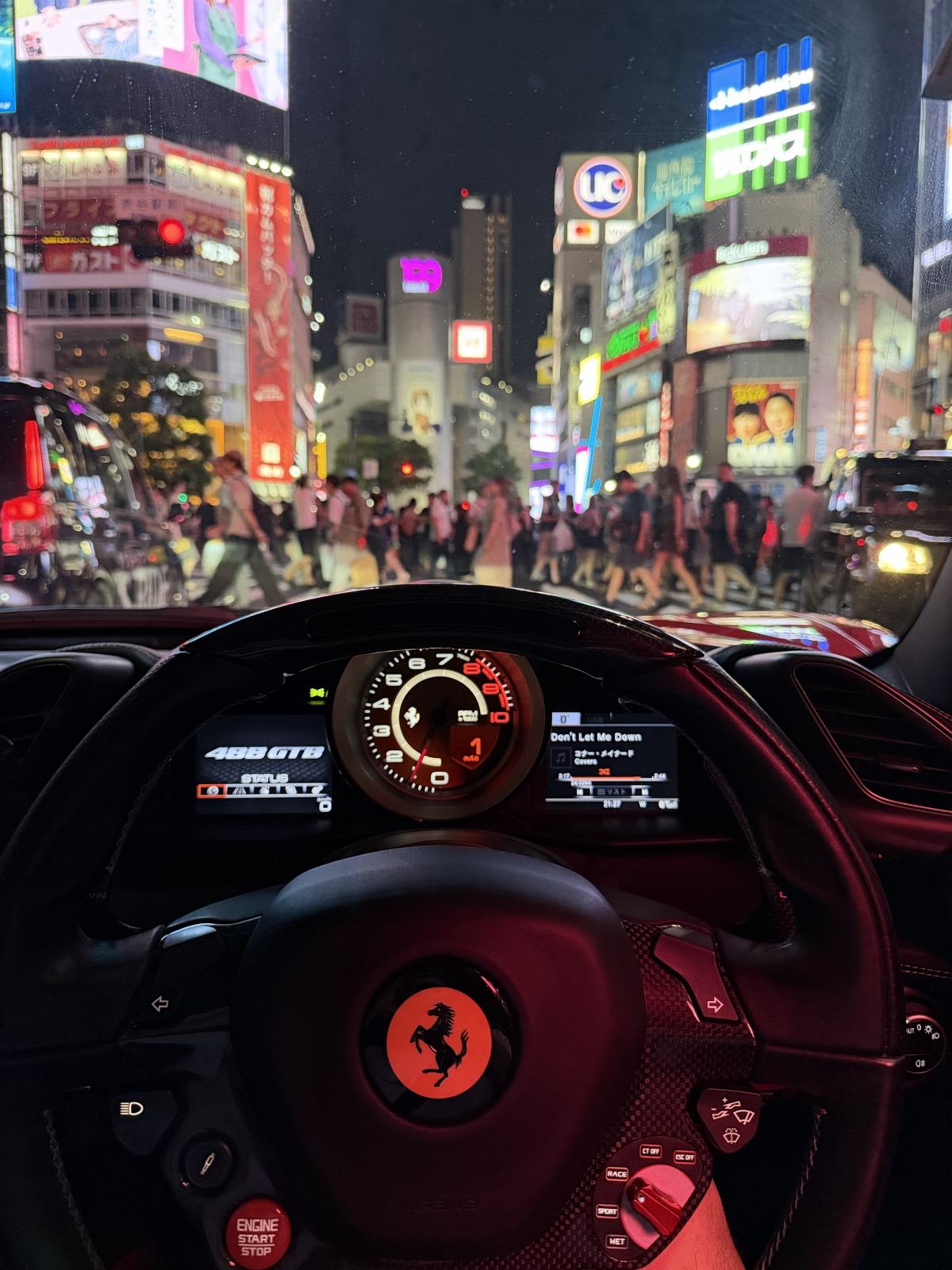
Tourists can rent a Ferrari or Lamborghini in Japan, but the requirements are stricter than most visitors expect and the real cost is considerably higher than the advertised day rate. This is an honest comparison — including the cases where renting genuinely is the better choice.
If you hold a valid International Driving Permit issued under the 1949 Geneva Convention, are comfortable driving on the left, and want several hours or a full day with the car including time outside the city, renting is a reasonable choice. If you are visiting for a short trip, want to actually see Tokyo rather than its traffic, want photographs and video of yourself with the car, or simply do not want a ¥500,000 insurance excess hanging over your holiday, riding as a passenger is the better option — and usually the cheaper one.
Yes, under specific conditions. Japan recognises International Driving Permits issued under the 1949 Geneva Convention, and only those. This matters enormously, because several countries issue IDPs under different conventions that Japan does not accept.
⚠️ The countries this catches out: Germany, Switzerland, Belgium, France, Monaco, Estonia, Slovenia and Taiwan do not issue 1949 Geneva Convention permits. Drivers from these countries need an official Japanese translation of their home licence issued by JAF or their embassy instead. Visitors from these countries are frequently turned away at rental counters. Always verify current requirements with the Japan Automobile Federation before travelling.
An IDP must be obtained in your country of residence before you travel. You cannot get one in Japan. It is valid for one year, and you must carry your home licence alongside it.
| Cost | Typical amount |
|---|---|
| Half-day supercar rental | ¥100,000–¥250,000 |
| Full-day supercar rental | ¥200,000–¥450,000 |
| Security deposit held on your card | ¥300,000–¥1,000,000 |
| Insurance excess if damaged | ¥500,000+ |
| Expressway tolls | ¥2,000–¥6,000 per outing |
| Fuel | Charged separately, and these cars are thirsty |
| Central Tokyo parking | ¥600–¥1,500 per hour |
The deposit is the part visitors underestimate. It is a genuine hold on your credit card for the duration of the rental, which can crowd out your card limit for the rest of your trip.
Tokyo is not a difficult city to drive in by the standards of large Asian capitals — Japanese drivers are disciplined, signage is clear and lane markings are excellent. But it presents specific challenges to a visitor in an unfamiliar, extremely wide, extremely low, extremely expensive car.
The Shuto Expressway is a network of elevated roads with very short entry ramps, tight radius curves and junctions that split with little warning. Lanes are narrow by European or American standards. Multi-storey car parks frequently have height and width limits that a supercar cannot clear, and many have ramps steep enough to ground a car with 90mm of clearance. Navigation systems in rental cars are often Japanese-only. And all of it is on the left.
None of this is insurmountable. But it does mean that a visitor driving a Ferrari through Tokyo spends the experience concentrating hard on the road — which is the opposite of what most people booked it for.
There are real cases. If you have a full day and want to drive the Hakone Turnpike or the Izu Skyline, a rental gives you something no city ride can. If you are an experienced driver who has driven on the left before and the point of the trip is the act of driving, renting is what you want. If you are staying in Japan for weeks rather than days, the maths shifts. We would rather say this plainly than pretend otherwise.
For a visitor on a short trip to Tokyo, riding wins on almost every axis. It costs less than a half-day rental, requires nothing but showing up, carries no financial exposure, and produces the photographs and video that people actually want from the experience. A 1-hour ride past Tokyo Tower, Rainbow Bridge, Shibuya and Ginza costs ¥100,000 per person; a 3-hour evening run to Daikoku PA costs ¥180,000 per person. Both include hotel pickup, and both leave you free to look out of the window.
Take the passenger seat instead. ¥100,000 for an hour, ¥180,000 for three hours to Daikoku PA.
View Packages & Book